

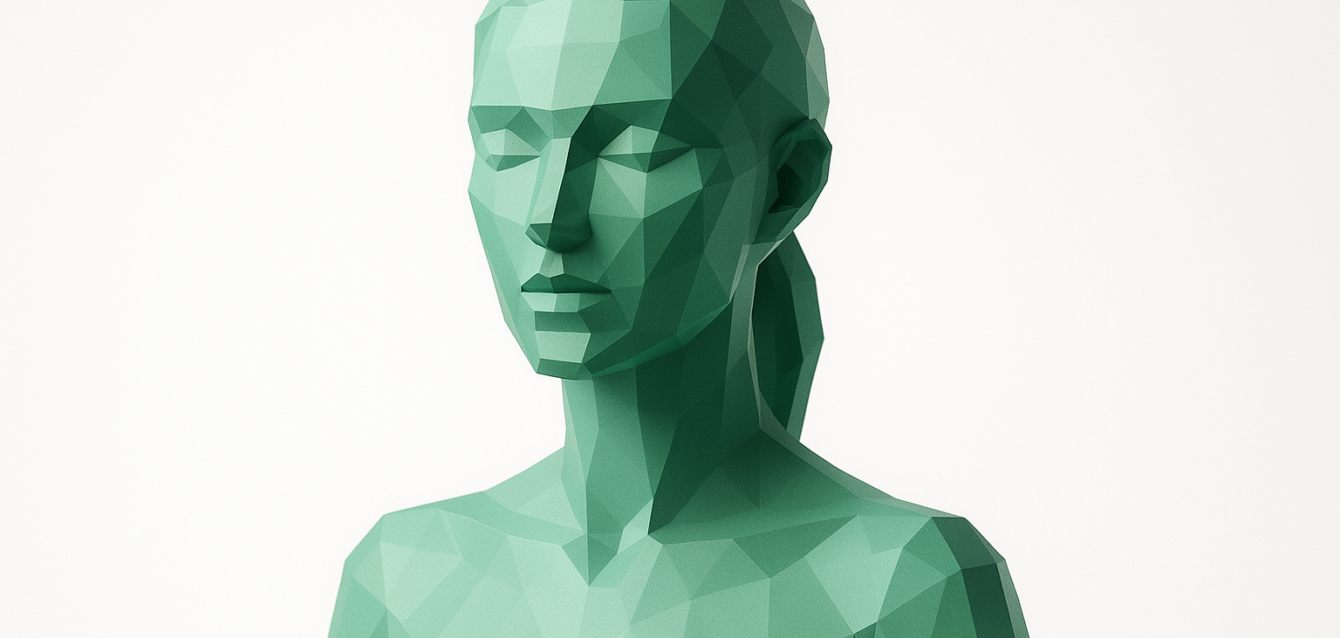
In 2023, a major fashion retailer sparked global controversy. They announced the use of AI-generated models to “increase diversity.” Critics called it a facade. Investors called it the future.
By 2026, the debate has largely settled. AI fashion model generation is no longer a PR stunt. It is the operating system of modern e-commerce.
For decades, the “hero shot” came with a massive price tag. Imagine that perfect image of a model walking down a sunlit Parisian street. That single seasonal campaign could easily cost $50,000.
Today, that same campaign is generated in a server room for pennies. It takes less time than catering a studio lunch.
This shift isn’t just about cutting costs. It is about scale and hyper-personalization. You can now show a single dress on twenty different body types dynamically. You can transform static inventory into a visual experience.
At **Thinkpeak.ai**, we see this as a fundamental shift in creative operations. The technology has matured from “experimental” to “essential.”
This guide dissects the landscape of AI fashion model generation in 2026. We cover the business case, top tools, ethical minefields, and how to build a self-driving creative stack.
What is AI Fashion Model Generation?
At its core, **AI fashion model generation** uses artificial intelligence to create photorealistic images. It relies on generative adversarial networks (GANs) and diffusion models.
Unlike traditional CGI, which requires manual 3D modeling, generative AI “imagines” the image. It uses vast datasets of fashion photography to construct the final visual.
The Evolution of the Tech
* **2020-2022 (The GAN Era):** Early tools used GANs to swap faces. The results were often uncanny. Eyes looked dead, and hands were notoriously mangled.
* **2023-2024 (The Diffusion Explosion):** Models like Stable Diffusion XL (SDXL) arrived. High-fidelity textures became possible. “Virtual Try-On” (VTON) technology began to mature.
* **2026 (The Agentic Era):** Today, we run **autonomous agents**. A “Digital Photographer” agent can take a ghost mannequin image and generate 50 variations. It upscales them to 4K and uploads them directly to Shopify without human intervention.
We don’t just give you a login to a tool. We build the pipeline that makes this technology an invisible, automated part of your business logic.
The Data-Driven Business Case: Why Brands Are Switching
The shift to AI modeling is driven by hard economics. The global digital fashion market is valued at approximately **$2.92 billion**. Projections show it rocketing to nearly **$40 billion by 2033**.
Here is why CFOs and CMOs are greenlighting these projects.
1. 90% Cost Reduction
Analysis of major European retailers highlights massive savings. AI imagery can cut production costs by up to 90% cost reduction.
* **Traditional Shoot:** $2,000–$5,000 for a 50-image catalog.
* **AI Workflow:** $150–$250 in compute and software costs.
2. Speed to Market (Weeks vs. Hours)
In fast fashion, speed is the only currency that matters.
* **Old Way:** Book model, shoot, retouch, and upload. **Total: ~3 Weeks.**
* **New Way:** AI Generation, review, and bulk upload. **Total: <1 day.**
3. Conversion Rate Optimization (CRO)
“Diversity” is a conversion metric. Customers are **40% more likely to purchase** an item if the model resembles them.
AI allows you to dynamically swap models. A user in Tokyo sees an Asian model. A user in Lagos sees a Black model. This level of localization was financially impossible with traditional photography.
The Tech Stack: Off-the-Shelf vs. Bespoke Engineering
This is the most critical decision a business must make. Do you subscribe to a SaaS tool, or do you build a proprietary engine?
Option A: The “SaaS” Route (Ready-to-Use Products)
The market is flooded with capable tools for standard requirements. These are “plug-and-play” solutions.
**Top Contenders in 2026:**
1. **Lalaland.ai:** The pioneer in diverse avatars. Great for basic catalogs.
2. **ZMO.AI:** Known for background generation.
3. **Vmake AI:** Strong for video generation.
4. **Botika:** Specializes in rapid face-swapping for Shopify.
**The Downside:**
* **Generic Look:** Your models look like everyone else’s.
* **”Hallucination” Risks:** These tools might accidentally “fix” your clothes. They might remove a button or smooth out a texture.
* **Subscription Fatigue:** Costs scale with volume.
Option B: Bespoke Internal Tools (The Thinkpeak Approach)
This is the “limitless” tier. It is for brands needing pixel-perfect accuracy and brand consistency.
**Thinkpeak.ai** specializes in this via our Bespoke Internal Tools.
1. Custom LoRA Training
We train a Custom LoRA specifically on your brand’s imagery. Does your brand favor specific lighting? We train the AI to replicate it. Do you have a “muse”? We create a consistent digital twin.
2. The ComfyUI Workflow
We utilize node-based architectures to create “non-destructive” workflows.
* **ControlNet Integration:** We force the AI model into exact poses that match your product’s cut.
* **Inpainting Automations:** If the AI messes up a hand, our agents automatically detect it and fix it.
3. Integration with Operations
A bespoke tool doesn’t sit in a silo. When a new SKU hits your ERP, the **Custom AI Agent** wakes up. It generates the images and writes the product description.
Step-by-Step Workflow: How We Build an Automated Studio
If you engage **Thinkpeak.ai**, we move beyond simple “generation” into “orchestration.” Here is the architecture.
Step 1: Input Standardization
AI needs good input. We set up a simple watcher on your storage drive. The photographer uploads “Ghost Mannequin” shots. A webhook fires, sending these images to our processing server.
Step 2: The “Digital Twin” Processing
We run a multi-stage inference process. We often utilize Flux.1 [dev] or SDXL models for maximum realism.
1. **Segmentation:** An AI agent separates the clothing from the background.
2. **Pose Matching:** The system selects a pose from your “Brand Bible.”
3. **Generation:** The model generates the human *underneath* the clothing. The garment remains 100% authentic.
4. **Face Restoration:** A specialized pass ensures eyes and skin texture are 8K quality.
Step 3: Quality Control & Metadata
Before the image goes live, it needs data. We configure a Visual QA Agent. It analyzes the image for artifacts and flags low-confidence images.
The agent also reads visual data to generate alt-text optimized for Google Shopping.
Step 4: Multi-Channel Deployment
A single image is no longer enough. Our **Omni-Channel Repurposing Engine** animates static images into video clips for Reels. It overlays promo codes and A/B tests them against old creative.
Ethical Considerations: Avoiding the “Levi’s Trap”
In 2024, Levi’s faced backlash for using AI models to increase diversity. Critics argued it was “fake” diversity. You must navigate the ethical landscape carefully.
1. The “Passing Off” Risk
Laws in the UK and EU protect celebrities. If your AI model looks too much like a famous person, you could face a lawsuit.
Biz kullanıyoruz Negative Prompting to ensure generated faces are distinct from public figures.
2. Transparency is Key
Don’t lie to your customers. Label AI-generated images. A simple “Digitally Styled” badge maintains trust.
3. Displacing Human Talent?
The best brands use AI to *augment* humans. Use real humans for “Hero” campaigns to maintain brand soul. Use AI for the 5,000 SKU catalog shots.
We believe in Döngüdeki İnsan systems. We want to free your creative directors to focus on art, not resizing JPEGs.
Advanced Use Case: The “Cold Outreach” Fashion Show
Imagine you are a B2B fashion wholesaler. Cold emails are usually ignored. Here is how we change that.
**The Cold Outreach Hyper-Personalizer:**
1. **Scrape:** Our system scrapes the LinkedIn profile of the buyer.
2. **Analyze:** It identifies their store’s aesthetic.
3. **Generate:** It generates a lookbook featuring your clothes on models that match *their* demographic.
4. **Send:** The email shows them exactly how your collection looks in their storefront.
This level of personalization increases reply rates significantly.
Future Trends 2026: What’s Next?
1. Hyper-Personalized Virtual Try-On (VTON)
Soon, e-commerce sites will allow users to upload their own photos. The site will regenerate every product image to feature the user. This requires massive backend scaling, which we can architect using serverless infrastructure.
2. Video is the New Standard
Static images are dying. Tools like Runway Gen-3 are integrating into fashion pipelines. Your AI models will walk, spin, and interact.
3. 3D & Digital Twins
Brands are creating 3D assets for gaming and retail simultaneously. We can build the bridge that converts your manufacturing CAD files into marketing assets automatically.
Sonuç
The era of the $50,000 photoshoot is over. Inefficiency is dead.
AI fashion model generation is a force multiplier. It allows a lean team to output the volume of a global conglomerate. It allows a local brand to speak to a global audience.
Buying a subscription to an AI tool is easy. Building an ecosystem where that tool talks to your inventory is where the advantage lies.
**Thinkpeak.ai** is the partner that builds that ecosystem. We turn manual operations into self-driving growth machines.
**Ready to modernize your creative stack?**
* Explore our solutions to start generating assets today.
* Request a Bespoke Audit. Let our engineering team design a custom AI pipeline for you.
Thinkpeak.ai ile Keşif Çağrısı Yapın
Sıkça Sorulan Sorular (SSS)
Is AI fashion model generation legal?
Yes, but with caveats. You own the copyright if there is significant human input. However, avoid infringing on “likeness rights” of celebrities. We recommend using generic AI faces or custom LoRAs.
Can AI models wear my actual clothes, or does it fake them?
Early AI “hallucinated” clothing. Modern Virtual Try-On (VTON) workflows preserve the original garment pixels. This ensures the product the customer sees is the product they get.
How much money can I really save?
Data suggests a **90% reduction** in direct production costs. A traditional shoot for 50 SKUs might cost $5,000. An AI workflow can produce superior results for under $500.
Will this hurt my brand’s reputation?
Only if done poorly. Low-quality models look cheap. “Fake diversity” looks unethical. High-fidelity, artistic imagery is rewarded with higher engagement.
Do I need a developer to use this tech?
For simple tools, no. For a fully automated workflow, you need an integration partner. That is where **Thinkpeak.ai** comes in. We bridge the gap between complex AI code and your business goals.