

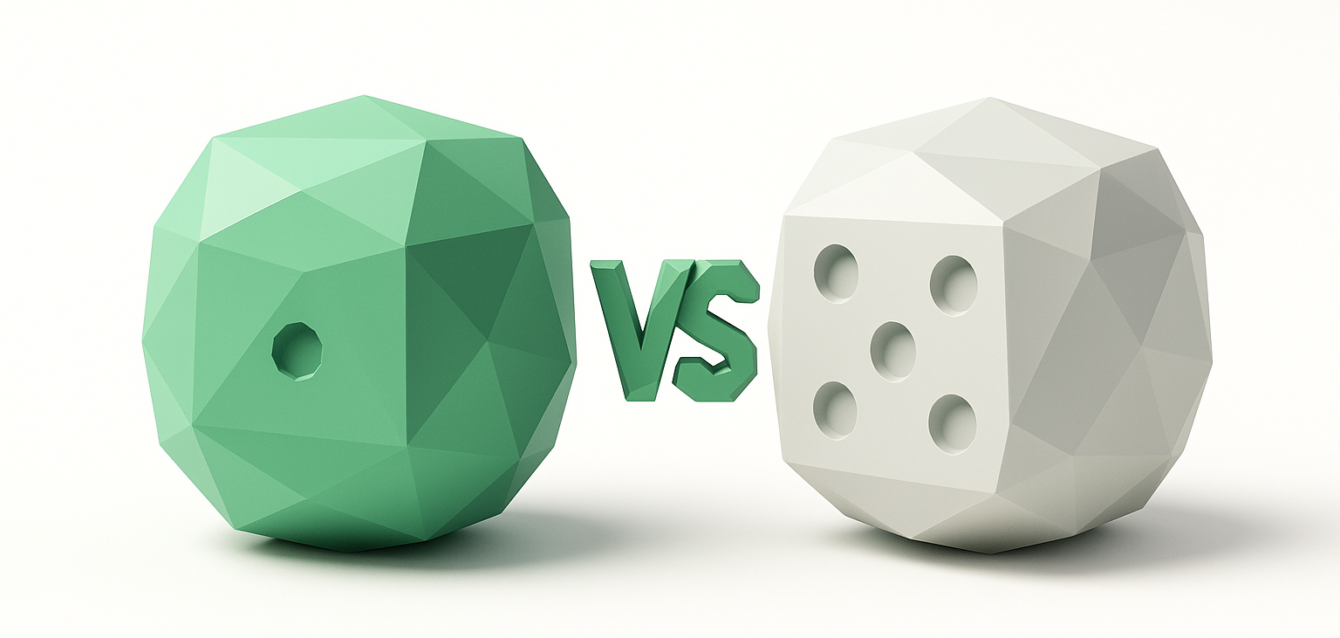
The Shift in Generative AI
Bu generative AI landscape has fundamentally shifted. For nearly two years, Midjourney held an undisputed monopoly on high-end AI imagery. It acted as a “walled garden,” locking stunning results behind a Discord interface.
This workflow was manual and unscalable. Then came Flux.1.
Developed by Black Forest Labs, the team behind the original Stable Diffusion, Flux.1 didn’t just enter the market. It exposed the cracks in Midjourney’s armor. It offered what the enterprise world desperately needed: state-of-the-art photorealism combined with open-weight automation potential.
Creative directors used to ask, “Which tool makes the prettiest picture?”
Business leaders in 2026 now ask, “Which tool can I build a business *on top of*?”
This analysis compares Flux.1 against Midjourney v6 to determine the superior model. We will evaluate them based on realism, typography, and scalable i̇ş otomasyonu.
-
The Contenders: A Technical Overview
To understand the output, we must first look at the architecture. The fundamental difference between these two models dictates how they fit into your tech stack.
Midjourney v6 (The Aesthetic King)
* **Access:** Closed Source (SaaS).
* **Interface:** Discord & Web Alpha.
* **Engine:** Proprietary “black box” model.
* **Best For:** Artistic flair, texture, lighting, and “vibes.”
* **Weakness:** Zero official API, difficult to automate, and struggles with complex instructions.
Flux.1 (The Precision Engineer)
* **Access:** Open Weights (Dev/Schnell) & Commercial API (Pro).
* **Interface:** Flexible (Run locally, via API, or third-party UIs).
* **Engine:** Hybrid architecture (Transformer + Diffusion) with 12B parameters.
* **Best For:** Photorealism, anatomy, typography, and automation.
* **Weakness:** Can feel “clinical” compared to Midjourney’s artistic bias.
The Flux Family Variants
* **Flux.1 [Pro]:** Closed-source, API-only. State-of-the-art image generation.
* **Flux.1 [Dev]:** Open-weight, guidance-distilled model. Non-commercial license.
* **Flux.1 [Schnell]:** The speed demon. Apache 2.0 licensed (fully commercial) and 10x faster than Pro.
-
Round 1: Photorealism & The “AI Glaze”
The “Midjourney Look” is a double-edged sword. It is undeniably beautiful, featuring dramatic lighting and high contrast. However, it often suffers from AI Glaze—a plastic, overly perfect sheen that looks artificial.
Skin Texture and Lighting
**Midjourney v6** tends to smooth out imperfections. Even with prompts like “raw photo,” it often applies a subconscious “beauty filter.” The lighting is dramatic and cinematic, which is excellent for movie posters but poor for authentic lifestyle marketing.
**Flux.1** delivers “grit.” It renders pores, uneven skin tones, and messy hair with shocking accuracy. The lighting in Flux simulates a physical camera sensor, including ISO noise and dynamic range, rather than a digital painting.
**The Verdict:**
İçin Commercial Photography, Flux.1 wins. It creates images that look like captures, not creations. For Fantasy or Sci-Fi Art, Midjourney remains superior.
> **Data Point:** Blind tests showed that 68% of users identified a Midjourney portrait as “AI” within 3 seconds. Only 42% could identify Flux.1 [Pro] generated portraits.
-
Round 2: Typography & Text Rendering
This area is where the battle becomes a massacre.
For years, AI image generators have been illiterate. Midjourney v6 made strides, but it remains a gamble. You might get “COFFEE,” or you might get “COFFFE.”
**Flux.1 is effectively literate.**
Due to its massive parameter count and transformer-based text encoder, Flux.1 understands typography. You can prompt: *”A neon sign in a rainy window reading ‘Thinkpeak Automations’ in cursive red font.”*
* **Midjourney:** Will likely struggle with the length or blend letters into the background.
* **Flux.1:** Will render it character-perfect with correct kerning 9 times out of 10.
**Business Implication:**
If you are automating ad creatives, you cannot use a tool that misspells your brand name. Flux.1 is the only viable choice for programmatic ad generation.
-
Round 3: Prompt Adherence
Midjourney acts like a talented but stubborn artist. If you ask for specific spatial arrangements, it often improvises because it “thinks it looks better.”
Flux.1 acts like a soldier. It follows complex, multi-subject prompts with rigorous adherence.
The “Spatial Relationship” Test
* **Prompt:** “A cat sitting on a TV, a dog sleeping under the table, and a bird cage hanging in the top left corner.”
* **Flux.1:** Places all three objects exactly where requested.
* **Midjourney:** Often merges animals, forgets the bird cage, or hallucinates elements.
**Why This Matters for Automation:**
Bina inşa ederken autonomous content agents, we rely on the AI to execute specific instructions. If an agent creates a diagram for a blog post, we need reliability, not random artistic improvisation.
-
Round 4: The Automation & Scale Argument
This is the most critical differentiator for Operations Managers and the C-Suite.
**Midjourney is a Bottleneck.**
Using Midjourney usually requires a human to sit in Discord. While unofficial APIs exist, they are fragile and violate Terms of Service. You cannot build a reliable enterprise product on a hack.
**Flux.1 is Infrastructure.**
Flux.1 is designed to be a mikroservis.
* **API Ready:** Host Flux on Replicate, Fal.ai, or AWS GPU instances.
* **Programmatic SEO:** Connect Flux.1 to the **SEO-First Blog Architect**. The agent generates articles, determines image context, and embeds unique images directly into your CMS.
* **Infinite Scale:** Need 10,000 personalized images? With Flux.1 [Schnell], you can generate them in minutes for pennies.
The Thinkpeak Integration: The Meta Creative Co-pilot
Imagine an agent that iterates on ads rather than just making them.
1. **Analyze:** The agent reviews Meta Ads Manager data and notices “Blue Backgrounds” drive higher CTR.
2. **Generate:** It uses Flux.1 to generate 20 new product shots with blue textures.
3. **Overlay:** It uses Flux text capabilities to overlay a promo code.
4. **Launch:** It automatically uploads new creatives to Facebook Ads Manager.
🚀 Ready to Build Your Own Creative Infrastructure?
Stop relying on manual prompting. Thinkpeak.ai can deploy custom “Digital Employees” that leverage Flux.1 to automate your content production, ad creative, and personalized outreach at scale.
-
Round 5: Cost of Ownership
How much does realism actually cost?
Midjourney (SaaS Model)
* **Cost:** $10 – $120 / month per user.
* **Hidden Cost:** Human labor. Someone must manually prompt, upscale, and download.
* **Commercial Rights:** Included in paid plans, but you do not own the model weights.
Flux.1 (API/Usage Model)
* **Cost:** Pay-per-inference.
* *Flux [Schnell]:* Approx. $0.001 – $0.003 per image.
* *Flux [Pro]:* Approx. $0.025 – $0.05 per image.
* **Efficiency:** You only pay for what you generate.
* **Self-Hosting:** If you have GPUs, [Dev] and [Schnell] models are free to run (hardware costs only).
**The Math of Scale:**
If you need 5,000 images a month, Midjourney requires multiple subscriptions and roughly 40 hours of labor, costing over $1,200/mo. Flux.1 API costs approximately $150/mo with zero human labor required once automated.
-
Conclusion: Which Tool Wins?
The winner depends entirely on your objective.
Choose Midjourney v6 if:
* You are a concept artist or illustrator.
* You prioritize “beautiful” images over strict realism.
* You are working on single, high-value images like book covers.
Choose Flux.1 if:
* You need Photorealism (People, Products, Real Estate).
* You need text inside your images.
* You are a business looking to automate workflows.
* You need to generate content at scale (Programmatic SEO, Dynamic Ads).
**The Strategic Verdict:**
Flux.1 has commoditized high-end realism. It has moved image generation from the “Art Department” to the “IT Department.” For businesses, this is the shift that matters.
We believe the future belongs to those who build systems, not just assets. By integrating Flux.1 into our Otomasyon Pazaryeri, we enable companies to generate thousands of on-brand assets without hiring new designers.
-
Sıkça Sorulan Sorular (SSS)
Is Flux.1 free for commercial use?
Yes and No. **Flux.1 [Schnell]** is Apache 2.0 licensed, making it free for commercial use. **Flux.1 [Dev]** is for non-commercial use only. **Flux.1 [Pro]** is paid via API, but you own the commercial rights to the generated images.
Can Flux.1 really replace a product photographer?
For e-commerce environments, yes. By using LoRAs (Low-Rank Adaptations), we can fine-tune Flux.1 on your specific product. This allows for infinite environments with photorealistic lighting, eliminating the need for physical shoots.
How do I automate Flux.1 with Make.com or n8n?
Since Flux.1 is available via APIs, it connects easily to automation platforms. You can trigger a workflow from Google Sheets, have ChatGPT write the prompt, send it to the Flux.1 API, and upload the result to your CMS.
Does Flux.1 have an “Inpainting” feature?
Yes. Flux.1 supports inpainting and outpainting. While Midjourney’s interface is more manual, Flux.1’s inpainting is precise and can be controlled programmatically. This is ideal for tasks like automatically replacing backgrounds on bulk product photos.
-
Kaynaklar
* https://docs.midjourney.com/docs/model-versions
* https://github.com/CompVis/stable-diffusion
* https://replicate.com/docs
* https://huggingface.co/docs/diffusers/index
* https://thinkpeak.ai