
Introduction: The Gravity of Manual Work Has Lifted
If 2024 was the year of the “Copilot,” 2025 was the year the pilot actually left the cockpit.
Welcome to 2026. The paradigm of “chatting with code” is dead. We have officially entered the era of Agent Orchestration.
For years, businesses were promised automation. Often, what they got was just the acceleration of manual tasks. You still had to prompt, review, and debug. The heavy lifting still rested on your shoulders.
Enter Google Antigravity.
Released in late 2025, Google Antigravity is now the operating system for the AI-first economy. It isn’t just an IDE. It is a Mission Control Center for autonomous agents. It shifts the human role from “writer” to “architect.”
At Thinkpeak.ai, we retooled our entire engineering stack around this platform. It allows us to turn static business operations into dynamic, self-driving ecosystems.
In this guide, we will unpack what Agent Orchestration looks like. We will show how it powers our Bespoke Internal Tools and how your business can leverage it.
Part 1: What is Google Antigravity?
To understand orchestration, you must understand the instrument.
Google Antigravity is an agent-first development platform. It integrates the reasoning capabilities of Gemini 3 Pro directly into the software lifecycle.
Unlike traditional tools where AI suggests code as you type, Antigravity introduces a Manager View. In this interface, you do not write code. You spawn agents.
The Core Components of Antigravity
- The Manager View (Mission Control): This is where orchestration happens. You define high-level objectives. You might say, “Build a React frontend for the inventory API.” Then, you assign these missions to agents.
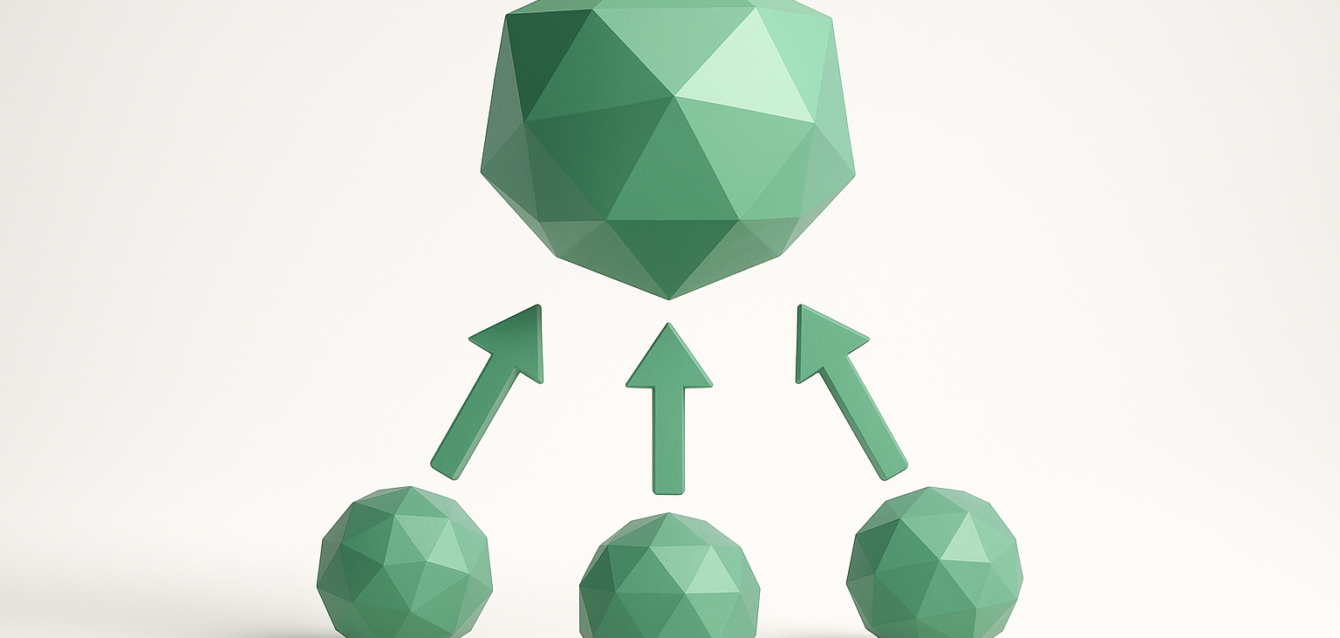
- The Agent Swarm: Antigravity allows for asynchronous execution. One agent writes backend logic in Python. Another writes the frontend in Flutter. A third runs tests. They all work at the same time.
- Artifacts: Agents don’t just dump text. They produce Artifacts. These are deliverables like implementation plans, task lists, and video recordings of tests.
- Model Context Protocol (MCP): This is the glue. MCP allows agents to securely connect to external data sources like Google BigQuery. It turns them from code-writers into data-aware employees.
At Thinkpeak, we use Antigravity to simulate entire operational workflows before deploying them to your live environment.
Part 2: The Mechanics of Agent Orchestration
Agent orchestration is the art of coordinating multiple AI entities to achieve a goal. It removes the need for constant human intervention. In Google Antigravity, this structure mirrors a human engineering team.
1. The Hierarchy of Agents
In a traditional setup, the developer is the “doer.” In Antigravity, the developer is the Manager. The agents are the specialists.
- The Architect Agent: This agent analyzes your project. It breaks down vague requests into actionable tickets. It turns “Make the app faster” into “Optimize SQL query on line 45.”
- The Builder Agent: This agent executes the code. It has access to the terminal and file system. It installs dependencies and creates files.
- The QA Agent: This is a revolutionary feature. Using Browser-in-the-Loop capability, this agent spins up a local server. It physically clicks through your app to verify the code works.
2. Asynchronous Execution Loops
Clients often struggle with development speed. They need an MVP immediately. Antigravity solves this with parallel orchestration.
Imagine building a custom low-code app for logistics:
- Agent A generates the database schema.
- Agent B generates the UI components simultaneously.
- Agent C writes the API documentation.
These agents share a Memory Layer. If Agent A changes the database, Agent B updates the UI code to match. It replicates a telepathic engineering team.
3. The Trust Layer: Artifacts & Verification
Trust was a major hurdle for AI adoption in 2024. Did the AI hallucinate?
Antigravity solves this with Artifacts. When an agent finishes a task, it presents a checkpoint:
- Plan Artifact: A checklist of intended actions.
- Execution Artifact: The code changes.
- Verification Artifact: A screenshot or log proving success.
As the orchestrator, you review the outcomes. You don’t need to read every line of code.
Part 3: Why This Matters for Your Business
You might be a CEO or Operations Manager. Why should you care about an IDE?
You care because Agent Orchestration lowers the cost of your proprietary software. It drastically improves time-to-market.
At Thinkpeak.ai, we leverage Google Antigravity for our Automation Marketplace and bespoke engineering services.
1. Supercharging Bespoke Engineering
Our Custom Low-Code App Development is built on this technology. Our engineers act as Orchestrators.
- SaaS MVPs in Weeks: Projects that took months now take weeks. We spawn agents for boilerplate code. Our senior architects focus on your unique business logic.
- Complex Process Automation: We can stitch your ERP and CRM together perfectly. Agents test these scripts before they ever touch your data.
2. The “Digital Employee” Concept
Antigravity isn’t just for building apps. It is for building Custom AI Agents.
Take the Inbound Lead Qualifier as an example. We use Antigravity to write the logic. Then, we use the QA Agent to simulate 1,000 conversations. We ensure the bot never promises a discount it shouldn’t. You get a battle-tested sales agent that runs 24/7.
Part 4: Technical Deep Dive – Integrating Google Cloud
For the technical leads, the power lies in deep integration. Antigravity connects with the Google Cloud ecosystem via the Model Context Protocol (MCP).
Connecting Agents to Data
In 2026, an agent without data is useless. Your business data lives in SQL databases and BigQuery warehouses.
Antigravity’s agents can access these resources securely. Consider our Google Ads Keyword Watchdog. We orchestrate an agent to connect to Google BigQuery. The agent queries data to find expensive keywords with low click-through rates. It proposes negative keywords automatically.
Once verified, we deploy this agent to Vertex AI Agent Builder for production.
The Gemini 3 Pro Advantage
Antigravity defaults to Gemini 3 Pro. This is Google’s flagship multimodal model. It offers a massive context window.
We can feed your entire company documentation into the agent’s context. If a bug occurs, the agent can watch a video recording of the error to understand and fix it.
Part 5: Case Study – The SEO-First Blog Architect
Let’s look at how we built one of our popular products: The SEO-First Blog Architect.
We needed a system that did more than just write. It needed to research, analyze competitors, structure content, and publish.
We didn’t write a single script. We orchestrated a swarm:
- Agent Alpha (Researcher): Fetches top keywords and extracts headers.
- Agent Beta (Analyst): Compares brand voice against competitors to identify gaps.
- Agent Gamma (Writer): Drafts sections using research and voice guidelines.
- Agent Delta (Publisher): Formats and uploads to the CMS via MCP.
The result is an autonomous workflow that functions like a marketing employee.
Part 6: Best Practices for Agent Orchestration
Here are the lessons Thinkpeak.ai has learned from the front lines.
1. Don’t Automate; Orchestrate
Automation implies a rigid process. Orchestration implies flexibility. Give agents goals, not just steps. Instead of saying “Click button A,” tell the agent to “Update the customer record.”
2. Human-in-the-Loop is Mandatory
The Manager View exists for a reason. For client-facing outputs, a Human-in-the-Loop is vital. The agent does 95% of the work. The human provides the strategic judgment.
3. Start with Internal Tools
Let agents talk to your database before they talk to your customers. Use our Internal Tools service to build admin panels. It is safer and provides immediate ROI.
Conclusion: Your Business Needs an Orchestrator
The release of Google Antigravity marked a point of no return. Software development costs have plummeted. However, the complexity of managing these systems has risen.
You don’t just need a developer anymore. You need a partner who understands this new world.
At Thinkpeak.ai, we are that partner. Whether you need speed from our Automation Marketplace or a custom platform, we can help. The gravity of manual operations is optional. It’s time to fly.
Book a Discovery Call with Thinkpeak.ai
Frequently Asked Questions (FAQ)
What is the difference between Google Vertex AI Agent Builder and Google Antigravity?
Google Antigravity is the IDE where developers build and test agents. Vertex AI Agent Builder is the cloud platform where those agents run at scale. Thinkpeak uses Antigravity to build the agents that run on your cloud.
Can Thinkpeak integrate these agents with Salesforce or HubSpot?
Yes. We use the Model Context Protocol (MCP) and custom API connectors. Your agents can securely read and write data to legacy systems like Salesforce, HubSpot, and SAP.
Is Agent Orchestration secure?
Security is a priority. We configure agents with “Least Privilege” access. For example, a Google Sheets agent can only access specific sheets, not your entire Drive.
How much coding knowledge do I need to use Thinkpeak’s services?
Zero. That is our value proposition. We handle the technical orchestration. You simply provide the business logic and the goal.