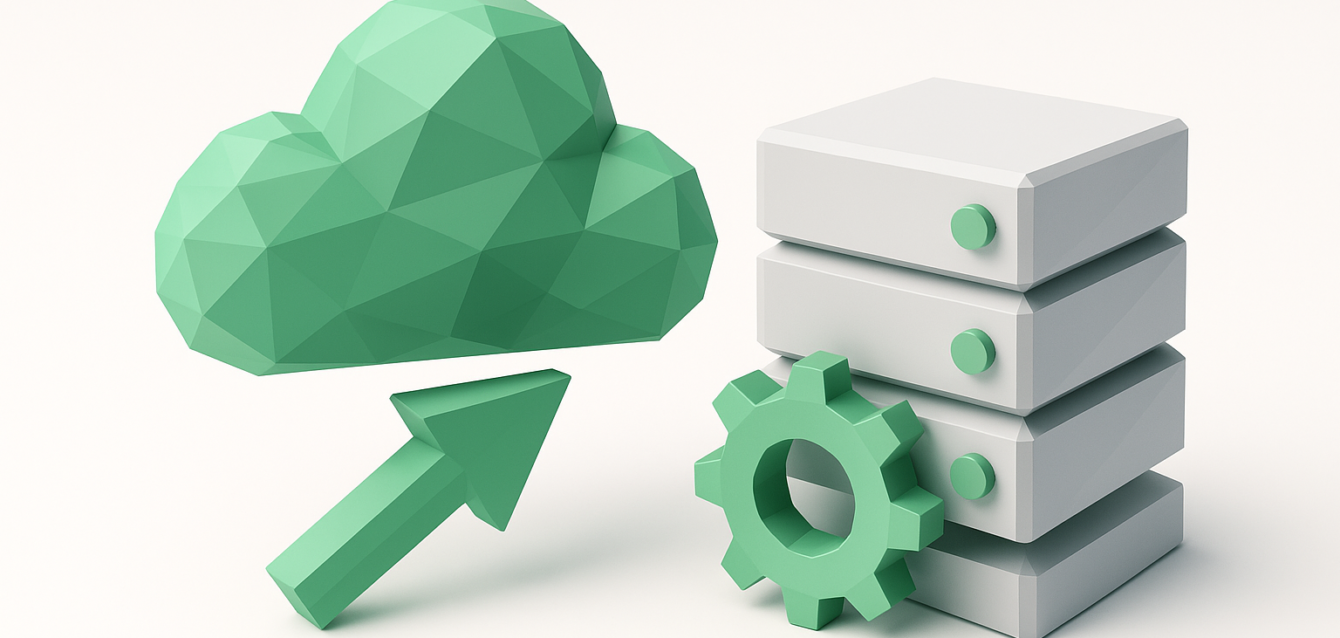
In 2024, the automation conversation was dominated by “what” you could automate. By 2026, the conversation has shifted entirely to “where” that automation lives.
For modern enterprises, data is no longer just a resource. It is a liability if mishandled and a goldmine if secured. The rapid proliferation of AI agents, digital employees that don’t just move data but reason with it—has forced technology leaders to reconsider their reliance on public cloud infrastructure.
The dilemma is sharp. Do you choose the Cloud for its zero-setup speed? This offers scalability but comes with rising costs and a potential loss of data sovereignty. Or do you opt for Self-Hosted solutions? This secures data behind your firewalls and caps costs, but it adds the burden of infrastructure maintenance.
This is not a simple choice between platforms like Make and n8n. It is a strategic decision about your company’s Total Cost of Ownership (TCO). It impacts your compliance posture in a fragmented global regulatory environment.
At Thinkpeak.ai, we exist at this exact intersection. Whether you need instant deployment via our Automation Marketplace or robust engineering services, we help businesses navigate the architecture of automation.
This guide breaks down the debate for 2026. We analyze the financial, technical, and legal trade-offs to help you build a future-proof automation stack.
In a nutshell, Cloud automation delivers fast setup, predictable subscription costs, and vendor-managed infrastructure for most businesses, while self-hosted automation gives full control of data, customization, and potential long-term cost savings at the expense of infrastructure responsibility.

Contact us Now ⬇️⬇️⬇️
The Core Definitions: Rented Land vs. Owned Castles
Before diving into the economics, we must clarify the architectural differences. These define the two approaches in the current tech landscape.
1. Cloud Automation (The SaaS Model)
This is the “Rented Land” model. Platforms like Make (formerly Integromat), Zapier, and Workato run on their own servers. You pay a subscription fee to access their infrastructure.
- The Promise: You log in, build a workflow, and it runs. There are no servers to patch and no uptime to monitor.
- The Reality: You are a tenant. If the provider raises the price per operation or changes API rate limits, you must comply. Your data resides in a multi-tenant environment, often crossing international borders.
2. Self-Hosted Automation (The Sovereign Model)
This is the “Owned Castle” model. You take software—such as n8n or custom Python scripts—and run it on your own infrastructure. In 2026, this usually means a Virtual Private Cloud (VPC) on AWS or DigitalOcean that you control.
- The Promise: You pay for raw computing power. You can run one workflow or ten million for roughly the same server cost. Your data never leaves your VPC.
- The Reality: You are the landlord. You are responsible for security patches, container management, and scaling the database.
3. The Hybrid Approach
Mature organizations are increasingly adopting a hybrid strategy. They use Cloud for low-risk marketing tasks and Self-Hosted for sensitive finance, HR, and R&D operations.
Thinkpeak Insight: Many of our clients start with templates for quick wins on Cloud platforms. As they scale, they hire us for Custom Low-Code App Development to migrate core business logic to a secure environment.
The Economic Showdown: “License Shock” vs. Human Capital
A common misconception is that Cloud is cheaper because the monthly subscription starts low. This is true only at the entry level. In 2026, we measure cost through TCO.
The Cloud Cost Curve: Linear and Unforgiving
Cloud automation uses a utility pricing model. You pay per “operation” or “task.”
- The “Tax” on Complexity: A sophisticated AI workflow might loop through 1,000 rows of data. If it enriches them and updates a CRM, a single run could consume 5,000 operations.
- The Scaling Trap: As your business succeeds, your costs rise linearly. A startup spending $50/month can quickly become a scale-up spending $5,000/month just to keep the lights on.
- 2026 Trend: License Shock has become a boardroom buzzword. Companies are realizing their “cheap” SaaS stack costs more than a dedicated engineering team.
The Self-Hosted Cost Curve: High Floor, Flat Ceiling
Self-hosting flips the economics entirely.
- Upfront Investment: Setting up a robust environment requires engineering hours. Recent data suggests the initial setup cost is roughly 5.25x higher than signing up for a SaaS plan.
- The “Fair Code” Dividend: Once running, the marginal cost of an additional workflow is near zero. You pay a flat fee for the server. Whether you run 10,000 or 10 million executions, your server bill remains largely flat.
The Hidden Cost: Maintenance
The main challenge with self-hosting is maintenance. If your server goes down at 3 AM, who fixes it?
- Cloud: The vendor fixes it. You sleep.
- Self-Hosted: You fix it. Or, you pay an agency to manage it.
Where Thinkpeak.ai Fits In: We eliminate maintenance anxiety. Our services act as your DevOps team. This gives you the flat-pricing benefits of self-hosting without the need to hire a full-time engineer. Learn more about our solutions here.
Data Sovereignty and Security in a Fragmented World
In 2026, data sovereignty is the driving force behind the migration to self-hosted infrastructure. The era of the “borderless internet” is effectively over.
The Regulatory Patchwork
- GDPR (Europe): Strictly regulates data leaving the EU.
- India, Brazil, UAE: These nations have introduced stringent data localization laws. Data must physically reside within national borders.
- US State Laws: Fragmented privacy laws across states like California and New York complicate compliance for SaaS providers.
The “Sovereign Cloud” Requirement
For industries like Healthcare, Finance, and Legal, using a public US-based SaaS platform is becoming a liability.
When you use a standard SaaS tool, your customer data is processed on their servers. You often cannot control the specific region. With a Self-Hosted Solution, you choose the data center. If you need your data to stay in Frankfurt, you spin up your server in Frankfurt.
Case Study: The Cold Outreach Machine
Consider the difference in outreach automation architecture.
- Cloud Version: Scrapes data, sends it to OpenAI in the US, processes it, and sends it to a CRM. Data crosses borders multiple times.
- Self-Hosted Version: We build a scraper that runs on your local server. It uses a local LLM or a private Azure OpenAI instance within your VPC. The prospect data never leaves your controlled environment.
The “Digital Employee” Era: AI Agents and Privacy
The rise of AI agents has intensified the debate. An automation script just moves data. An AI agent reads and understands it. This distinction is critical for privacy.
Cloud AI (APIs)
Connecting your automation to major models via API is the standard approach.
- Pros: Access to the smartest models on the planet with zero infrastructure management.
- Cons: You are sending your proprietary business context to a third party. The “black box” nature remains a risk for IP-heavy firms.
Self-Hosted AI (Local LLMs)
By 2026, open-source models have reached parity with previous generation top-tier models.
- The Capability: You can run these models on your own GPU servers.
- The Advantage: Zero-Trust Architecture. You can build a Custom AI Agent that reviews internal legal documents without a single byte leaving your intranet.
- Thinkpeak’s Role: We specialize in Custom AI Agent Development. We deploy local LLMs customized to your business context, ensuring total privacy.
Performance Limits and “Noisy Neighbors”
Performance in automation is about two things: Latency (speed) and Throughput (volume).
The Cloud Throttling Problem
SaaS platforms rely on multi-tenancy. To prevent one user from crashing the system, they impose strict limits.
- Rate Limits: You can only make a specific number of requests per minute.
- Timeout Limits: If a workflow takes longer than 40 seconds, it is often killed.
- Throttling: If you burst too much data at once, your execution speed is deliberately slowed.
The Self-Hosted “Bare Metal” Power
When you self-host, the only limit is the physics of your hardware.
Need a workflow that processes video files for 4 hours? On a self-hosted server, that is fine. On Cloud, it is often impossible. If you need to process 5,000 webhooks per minute, self-hosting is the only viable option economically and technically.
For clients dealing with massive datasets, we often architect backend solutions that bypass standard API limits. This ensures thousands of rows are processed in seconds, not hours.
Comparison Matrix: Make vs. n8n vs. Custom Code
To make this practical, let’s compare the three dominant paradigms in 2026.
| Feature | Make (Cloud SaaS) | n8n (Self-Hosted/Hybrid) | Custom Code (Thinkpeak Bespoke) |
|---|---|---|---|
| Setup Time | Instant (Login & Go) | Moderate (Docker Setup) | Variable (Development Phase) |
| Pricing Model | Per Operation (High Scale Cost) | Flat Server Cost (Low Scale Cost) | Project-Based + Maintenance |
| Data Control | Vendor Managed (Risks) | Full User Control (Sovereign) | Absolute Control |
| AI Integration | Native API Connectors | Native + Local LLM Support | Limitless (Local or API) |
| Maintenance | Zero | High (Requires DevOps) | Managed by Thinkpeak |
| Best For | Marketing, MVP, Simple Ops | Internal Tools, High Volume | Core Product, SaaS, Complex Logic |
The “Low-Code” Nuance
It is important to note that Thinkpeak.ai leverages platforms like FlutterFlow and Bubble for development. These platforms sit in the middle. We help you choose the platform that aligns with your long-term exit strategy and data requirements.
When to Choose Cloud (and How to Optimize It)
Self-hosting isn’t always the answer. Cloud is superior when Time-to-Value is your priority.
Ideal Use Cases for Cloud:
- Marketing Automations: Connecting Facebook Leads to Google Sheets. The data is already public or cloud-based, and speed is key.
- Prototyping: Validating a business logic before investing in infrastructure.
- Low-Volume, High-Complexity: Tasks that run once a day but require connections to 50 different SaaS tools.
Optimizing Cloud Costs with Thinkpeak
If you choose Cloud, efficiency is money. Poorly designed workflows burn credits unnecessarily.
Thinkpeak provides pre-architected templates. These aren’t just “connectors”; they are optimized algorithms. For example, our engines are designed to maximize output while minimizing the API calls that drive up your bill.
When to Choose Self-Hosted (and How to Manage It)
Self-hosting is the answer when Control, Cost-at-Scale, and Compliance are priorities.
Ideal Use Cases for Self-Hosted:
- High-Volume Data Processing: Syncing entire databases or processing thousands of orders daily.
- Sensitive Data Ops: HR onboarding, Financial approvals, and Patient data handling.
- AI Agents: Running autonomous agents that require deep access to internal knowledge bases.
The “Managed” Self-Hosted Solution
This is where Thinkpeak.ai shines. We offer Total Stack Integration. We architect the backend, deploy it to your private cloud, and build the frontend interfaces.
The result? You get the power and savings of self-hosting, but the hands-off experience of SaaS.
The Hybrid Future: Orchestrating the Ecosystem
The most sophisticated businesses in 2026 don’t choose one; they choose both. They build a “Hub and Spoke” model.
- The Hub (Self-Hosted): The core business logic, database of record, and sensitive AI agents live in a secure, self-hosted environment.
- The Spokes (Cloud): Marketing triggers, social media listening, and temporary data ingestion happen in the Cloud for speed and agility.
Thinkpeak.ai acts as the architect of this ecosystem. We help you seamless integration ensures you pay for Cloud only when necessary, while keeping your “Crown Jewels” data secure and cheap to process locally.
Conclusion
The decision between Cloud and Self-Hosted automation is no longer a technical detail—it is a business strategy.
Choose Cloud if you need velocity, have low-to-medium volume, and your data sensitivity is manageable. Use our Automation Marketplace to ensure your cloud workflows are efficient from Day 1.
Choose Self-Hosted if you are scaling, processing sensitive data, or building long-term IP. Leverage our Bespoke Internal Tools to build this infrastructure without the overhead of hiring an internal DevOps team.
In the era of AI and automation, infrastructure is destiny. Don’t let your growth be capped by API limits or drained by linear pricing models.
Ready to build your ecosystem? Whether you need a template to automate your SEO today, or a fully architected business operating system for tomorrow, we are your partner.
Frequently Asked Questions (FAQ)
Is self-hosting n8n really free?
The software license for n8n Community Edition is free for internal business use. However, “free” software requires paid infrastructure. You will pay for the Virtual Private Server (VPS), storage, and backups. The real cost is the time to manage it, which is why managed services are popular for teams who want savings without the headache.
Can I migrate from Make.com to a self-hosted setup later?
Yes, and this is a common growth path. Many businesses prototype on Make.com. Once the workflow is proven and volume spikes, they migrate to a self-hosted environment to save costs. Thinkpeak.ai specializes in these migrations, ensuring zero downtime.
How does self-hosting affect AI data privacy?
Self-hosting is the gold standard for AI privacy. When you use Cloud AI, your data is often processed on external servers. When you self-host an open-source LLM on your own GPU server, the data never leaves your machine. This is essential for law firms and R&D labs.
Do I need a developer to run self-hosted automation?
Traditionally, yes. You need someone comfortable with Docker and server security. However, with our bespoke services, we handle the technical side. We build the system and give you a user-friendly admin panel so you can run your business without touching code.
What is “Fair Code” licensing?
“Fair Code” means the source code is visible and free to use for almost everyone. The major restriction is that you cannot resell the software as a competing SaaS product. For 99% of businesses using it for internal operations, it functions exactly like Open Source.