
The Hidden Costs of SaaS Subscriptions: Why Renting Your Tech Stack is Bleeding Your Profit Margins
In the early 2010s, Software-as-a-Service (SaaS) promised agility and low costs. It was the democratization of enterprise tooling. Fast forward to 2026, and that promise has curdled. For many organizations, it has become a logistical and financial nightmare.
The average enterprise now juggles between 220 and 340 distinct applications. What began as a monthly subscription for a CRM has metastasized. It is now a sprawling, disconnected web of recurring operational expenses.
While the headline price of a single seat seems negligible at $29 or $49 a month, the cumulative impact is staggering. However, the invoice you see is only the tip of the iceberg.
The true damage lies beneath the surface. It is in the productivity lost to context switching and the security risks of Shadow IT. It is the “integration tax” required to make tools speak to one another. This article dissects the hidden costs of SaaS subscriptions that silently erode your margins.
We will outline a strategic shift. We must move away from a rental economy toward an ownership economy. Businesses must use AI and low-code engineering to build proprietary, self-driving ecosystems.
The Visible Iceberg: Inflation and The “Forever” Rental Trap
Before diving into obscure costs, we must address the obvious. The direct cost of renting software is rising faster than almost any other business expense.
The SaaS Inflation Index
Between 2023 and 2025, global inflation began to cool, but SaaS inflation accelerated. Reports indicate that SaaS prices rose by approximately 12% in 2024 alone. Aggressive hikes are continuing into 2026.
Major vendors like Salesforce, Microsoft, and Atlassian have utilized their entrenched positions. They have pushed price increases ranging from 9% to over 40%. This is the “rental trap.”
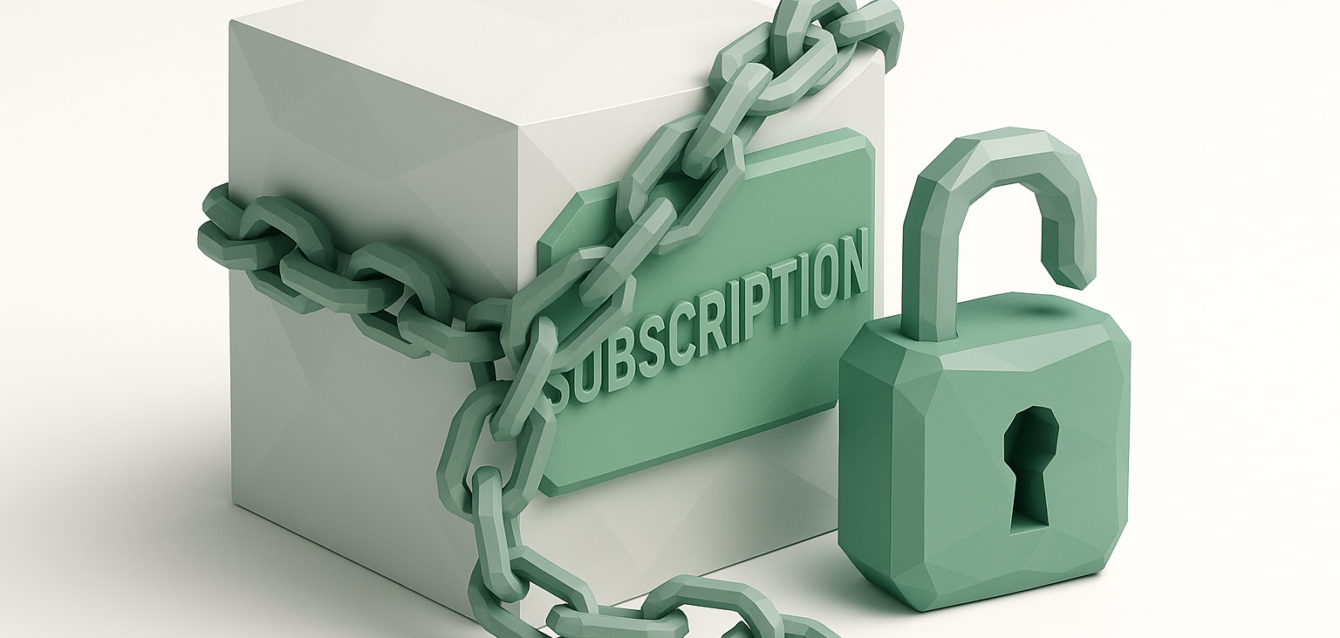
Once your data and workflows are locked into a proprietary ecosystem, switching costs are astronomically high. Vendors know this. They know migrating your CRM is a project you want to avoid. Consequently, you become a captive audience to annual price hikes.
The “Per Seat” Fallacy
The dominant business model of SaaS is seat-based pricing. It sounds fair to pay for what you use. In practice, it punishes growth. As your company scales, your software bill scales linearly.
Consider a standard sales stack:
- CRM: $100/user/month
- Outreach Tool: $90/user/month
- Data Enrichment: $50/user/month
- Call Recording: $40/user/month
That is nearly $300 per salesperson, per month, just to exist digitally. For a team of 50, that is $180,000 annually. You are renting this capability, never owning it. If you stop paying, the tools vanish.
The Thinkpeak Perspective: Own the Asset
At Thinkpeak.ai, we challenge the assumption that you must rent these capabilities forever. Why pay heavily for a fragmented sales stack? You can build a Cold Outreach Hyper-Personalizer.
This proprietary system scrapes prospect data, enriches it, and generates high-conversion icebreakers automatically. Instead of paying for 50 seats, you build the infrastructure once. Your cost basis shifts from “per user” to “compute usage.” This is drastically cheaper and scales efficiently.
Hidden Cost #1: The Waste of “Shelfware” and Over-Provisioning
If the rising cost of active subscriptions is painful, the cost of inactive ones is tragic. Shelfware refers to software that is purchased but never used. It is a massive drain on corporate IT budgets.
The average organization wastes approximately $18 million annually on unused SaaS licenses. Data suggests that nearly 50% of provisioned licenses go unused over a 90-day period. This happens through a few common mechanisms:
- “Just in Case” Provisioning: Buying bulk licenses to secure a volume discount, even if you don’t have enough employees to use them.
- The Zombie Subscription: An employee leaves, but their licenses for Asana or Zoom are never de-provisioned. You continue paying for a “ghost” employee.
- Feature Overlap: Marketing buys Monday.com, Engineering uses Jira, and HR uses Trello. You pay for three tools that do the same thing.
Hidden Cost #2: The Productivity Tax of Context Switching
The most insidious hidden cost isn’t on the invoice. It is in the brains of your employees. It is the cost of Context Switching. A 2025 study found that employees lose approximately five working weeks per year simply toggling between applications.
A Day in the Life of a Fragmented Workflow
Consider a typical Marketing Manager’s workflow:
- 09:00 AM: Checks email in Outlook.
- 09:15 AM: Receives a Slack notification regarding a campaign.
- 09:20 AM: Logs into Asana to update task status.
- 09:25 AM: Opens HubSpot to check lead quality.
- 09:40 AM: Opens Google Sheets to manually export data because native reporting is insufficient.
Every time the user switches tabs, there is a “cognitive penalty.” This is the ramp-up time required to refocus. The friction of moving data between these silos turns high-paid strategic thinkers into data-entry clerks.
The Solution: Centralized Portals
This fragmentation is why we focus on Internal Tools & Business Portals. Instead of forcing your team to toggle between five apps, we build a single, unified “Command Center.”
Imagine a dashboard where your manager can view CRM data and trigger email campaigns without leaving one custom interface. This isn’t just convenience. It is reclaiming the productivity lost to the “toggle tax.”
Hidden Cost #3: The Integration and “Glue” Tax
In the SaaS world, “best of breed” is a popular philosophy. You buy the best CRM and the best email tool. The problem is that none of them talk to each other natively. To fix this, companies incur the Integration Tax.
1. The Middleware Bill
To connect disparate tools, businesses subscribe to automation platforms. As your data volume grows, so does the bill. A complex business can spend thousands a month just to move their own data from column A to column B.
2. The Fragility Cost
SaaS APIs change and connectors break. When a mission-critical workflow fails because a vendor updated their API, operations halt. The cost is the engineering hours required to debug these pipelines.
This is where the Thinkpeak.ai Automation Marketplace differentiates itself. We provide pre-architected workflows. For true scale, we move clients toward Total Stack Integration. This ensures your ERP and CRM communicate intelligently without reliance on fragile middleware.
Hidden Cost #4: Shadow IT and The Security Gamble
When IT moves too slowly, employees go rogue. They sign up for tools using corporate credit cards. This is Shadow IT. Current estimates suggest Shadow IT accounts for 30% to 40% of all IT spending in large enterprises.
The costs here are threefold:
- Duplicate Spend: Teams buy tools that other departments already pay for, missing volume discounts.
- Data Leakage: Sensitive company IP is uploaded to unvetted AI tools.
- Compliance Fines: Breaches caused by Shadow IT can lead to regulatory fines that dwarf the software cost.
Hidden Cost #5: The “Generic Software” Ceiling
Perhaps the most subtle cost is the Opportunity Cost of mediocrity. SaaS is built for the mass market. It is designed to satisfy the average needs of 100,000 different companies.
This means the software rarely fits your specific business logic perfectly. You are forced to alter your unique processes to fit the tool’s limitations. You adopt workarounds and spreadsheets to bridge gaps.
The Custom App Advantage
There is a tier beyond SaaS. Our Bespoke Internal Tools service is built on a simple premise: if business logic exists, the infrastructure should support it. Using low-code platforms like FlutterFlow and Bubble, we allow businesses to build consumer-grade applications.
You get code-level performance without the massive overhead of traditional engineering. You stop paying for features you don’t need and start investing in features that give you a competitive edge.
The Strategic Shift: From Renting Seats to Building Agents
The ultimate hidden cost of SaaS is that it perpetuates a labor-heavy model. Most tools are designed to make humans more productive. You buy a seat for a human, and the human uses the tool.
The future of operations is not “human + tool.” It is “human + agent.”
The Digital Employee
Thinkpeak.ai specializes in Custom AI Agent Development. These are autonomous agents capable of reasoning and executing tasks 24/7.
Compare the economics:
- SaaS Model: You hire a junior specialist ($50k/year) and buy them multiple tools ($500/mo). Total Cost: ~$56,000/year.
- Thinkpeak Model: You deploy an SEO-First Blog Architect. This agent researches keywords and generates optimized articles directly into your CMS. The agent doesn’t sleep and doesn’t pay monthly subscription fees.
How to Audit Your Stack and Stop the Bleeding
If you suspect your organization is suffering from SaaS bloat, here is a tactical approach to regaining control.
Step 1: The Forensic Audit
Don’t just look at the IT budget. Look at expense reports. Shadow IT hides in “Marketing Expenses” or “Training.” Identify every recurring software charge and map them to business functions. You will likely find multiple tools doing the exact same job.
Step 2: Rationalize and Consolidate
Kill the zombies. Cancel duplicate subscriptions. Ask why you have these tools. Do you need expensive proposal software? Or could a Thinkpeak AI Proposal Generator create branded PDFs instantly, eliminating that subscription?
Step 3: Identify High-Friction Workflows
Where is your team copy-pasting data? These are the “black holes” of productivity. This is the perfect use case for custom process automation. If finance has a multi-stage approval process living in email chains, we can architect a workflow that automates the journey.
Step 4: Build vs. Buy Assessment
For your core competencies, stop buying generic SaaS. If you are a logistics company, don’t run your business on a generic project tool. Build a custom platform. The initial investment in building a proprietary asset often pays for itself by eliminating licensing fees.
Conclusion: The Era of Self-Driving Operations
The hidden costs of SaaS subscriptions are a tax on your potential. Inflation, waste, and integration debt keep your business static. They keep you dependent on third-party vendors who prioritize their upsell metrics over your efficiency.
Thinkpeak.ai exists to break this cycle. We transform static operations into dynamic, self-driving ecosystems. Whether you need the speed of our Automation Marketplace or the potential of Bespoke Engineering, the goal is the same. Reduce overhead, increase speed, and own your future.
Don’t let your budget die a death by a thousand subscriptions. It is time to build a stack that works for you.
Ready to Transform Your Operations?
Stop renting. Start building. Discover how we can replace your bloated SaaS stack with lean, efficient AI agents and custom tools.
Explore the Automation Marketplace
Frequently Asked Questions (FAQ)
Why are SaaS prices increasing so fast in 2026?
SaaS inflation outpaces general inflation due to the rising cost of capital and the “AI premium.” Vendors bundle AI features you may not need to justify price hikes. They are shifting focus from user acquisition to monetizing their captive audience.
How does “Shadow IT” contribute to hidden SaaS costs?
Shadow IT causes duplicate spending and security risks. Teams buy the same tools without volume discounts. Furthermore, unvetted apps can cause data breaches, leading to compliance fines that far exceed the cost of the software.
Is building custom internal tools actually cheaper than SaaS?
In the short term, SaaS has a lower upfront cost. However, custom tools often prove significantly cheaper over a 2-3 year horizon. You pay a one-time development fee rather than renting forever. Crucially, your costs do not increase simply because you hire more employees.
What is the difference between an AI Agent and a SaaS tool?
A SaaS tool is a passive utility a human must operate. An AI Agent is an active system that performs the work itself. For example, our Inbound Lead Qualifier actively engages and qualifies leads, replacing the labor rather than just storing the data.
How can Thinkpeak.ai help reduce my SaaS bill?
We help in two ways. First, our Automation Marketplace provides workflows that replace expensive standalone products. Second, our Bespoke Engineering allows you to build custom apps. These replace heavy enterprise software, giving you exact functionality without the bloat.