
In the digital economy of 2026, data is no longer just “the new oil.” It is the nervous system of your entire enterprise. But for most businesses, that nervous system is severed.
Consider the average mid-sized enterprise today. Most utilize over 300 distinct SaaS applications. You likely have Salesforce for CRM, HubSpot for marketing, and Slack for communication. You use specialized tools for HR, project management, and analytics.
Ideally, these tools should sing in harmony. In reality, they often operate in isolation. This creates what industry analysts call Data Silos.
The cost of this isolation is staggering. Recent studies estimate that unconnected data costs the global economy trillions annually. On a micro level, businesses lose significant revenue simply because their systems cannot communicate. Leads generated in marketing do not sync with sales fast enough. Operations invoices lag behind finance.
The result is static, manual operations that bleed efficiency. Enter iPaaS (Integration Platform as a Service).
iPaaS is the revolution of the 2020s. It is the “glue” that binds disparate applications into a cohesive, self-driving ecosystem. However, traditional iPaaS is evolving in the AI era. It is no longer just about connecting pipes. It is about intelligent, autonomous agents that reason, decide, and execute.
This guide explores everything you need to know about iPaaS. We will dismantle the technical jargon and explore the shift to AI-driven automation. We will also show how partners like Thinkpeak.ai help businesses build proprietary software stacks without massive overhead.
What is iPaaS? Defining the Engine of Modern Business
iPaaS stands for Integration Platform as a Service.
At its core, an iPaaS is a cloud-based suite of tools. It enables the development, execution, and governance of integration flows. Think of it as a universal translator and traffic controller for your software.
It allows different applications to exchange data safely, securely, and in real-time. This applies whether they are on-premise or in the cloud.
The Breakdown
- Integration: The act of connecting two or more applications. For example, “When a new row is added to Google Sheets, create a new contact in Salesforce.”
- Platform: A centralized hub where these connections are built, monitored, and managed.
- As a Service: Delivered via the cloud. You do not need to install physical hardware or maintain complex middleware servers.
The “Spaghetti Code” Problem vs. The iPaaS Solution
Before iPaaS, companies relied on Point-to-Point (P2P) integration. If you needed your email marketing tool to talk to your CRM, you hired a developer. They wrote a custom script.
This works fine for two apps. But as you scale to 50 or 100 apps, the connections grow exponentially. Managing hundreds of custom scripts becomes a nightmare known as “Spaghetti Code.” If one API changes, the whole system breaks.
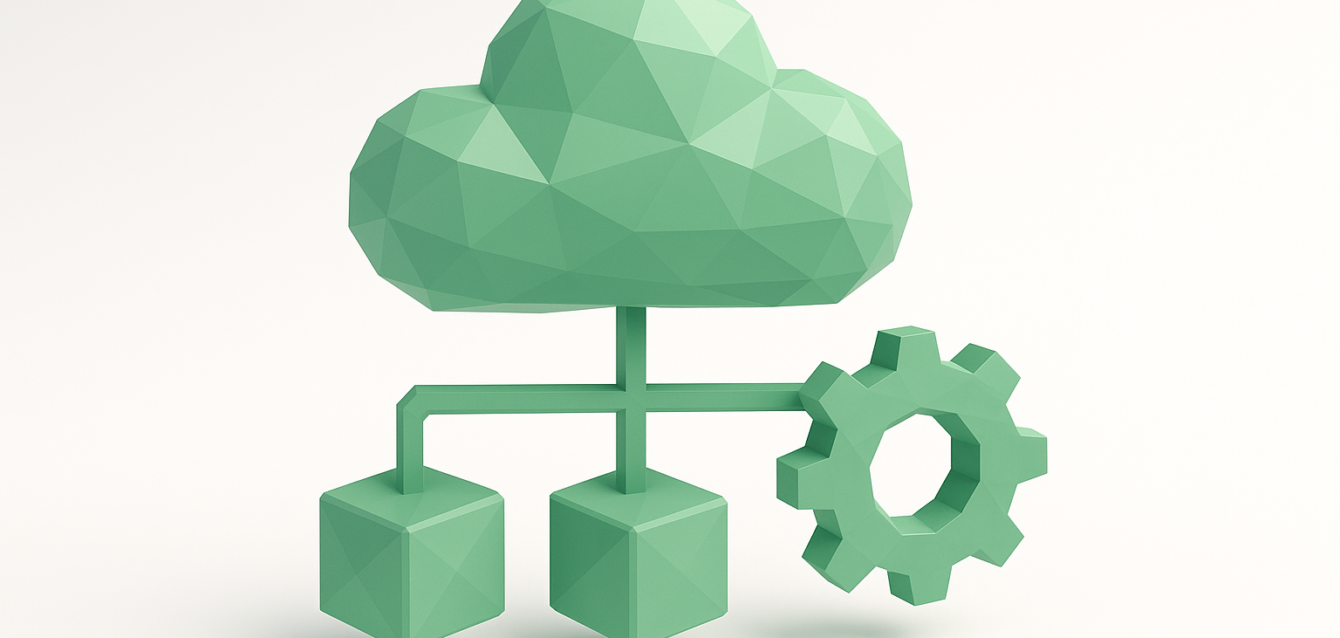
iPaaS centralizes this chaos. Instead of a web of direct connections, every app connects to the iPaaS hub. The hub manages the traffic. If you swap your CRM, you simply unplug the old one from the hub and plug in the new one.
The Evolution of Integration: From ESB to AI-Driven Agents
To understand where we are going, we must understand the past. The journey to modern automation has passed through three distinct eras.
1. The Era of the Enterprise Service Bus (ESB)
In the early 2000s, integration was for the Fortune 500. Systems like the Enterprise Service Bus (ESB) were heavy, on-premise giants. They were expensive and required armies of IT specialists. They were designed for a world where software lived on physical servers.
2. The Rise of Classic iPaaS (2015–2023)
With the cloud boom, tools like MuleSoft and Boomi emerged. Accessible “citizen developer” tools like Zapier and Make followed. These platforms democratized integration.
Suddenly, marketing managers could build simple workflows. The focus was on Triggers and Actions: If X happens, do Y.
3. The Era of AI & “Digital Employees” (2024–Present)
This is where Thinkpeak.ai operates. We have moved beyond simple “if/then” logic. The modern iPaaS landscape is now powered by Generative AI and Large Language Models (LLMs).
We are no longer just moving data; we are processing it.
- Old Way: Copy the email text from Gmail to Slack.
- New Way: Read the email and analyze the sentiment. Draft a personalized reply based on company policy. Generate a PDF proposal. Notify the sales team only if the lead is qualified.
This shift transforms static tools into Custom AI Agents. These are digital employees capable of reasoning and decision-making 24/7.
Why Businesses Are Rushing to iPaaS in 2026
The market speaks for itself. The global iPaaS market is projected to reach over $134 billion by 2033. Why is adoption skyrocketing?
1. The Death of the “All-in-One” Suite
Gone are the days when a single ERP suite could do everything perfectly. Today’s businesses prefer a Best-of-Breed approach. They want the best CRM, the best HR tool, and the best Analytics platform. iPaaS is the only way to make a diverse stack function like a single suite.
2. The Rise of the “Citizen Developer”
Analysts predicted that most new applications would be built using low-code technologies. This prediction has come true. Businesses can no longer wait months for IT to build a feature.
Platforms like Make.com and n8n allow for rapid iteration. However, architecture remains difficult. This is where Thinkpeak.ai bridges the gap. We provide the expertise to turn low-code tools into enterprise-grade infrastructure.
3. Cost Efficiency & Technical Debt Reduction
Maintenance costs for legacy code are a silent killer. By offloading integration logic to an iPaaS, companies reduce technical debt. You stop paying developers to maintain plumbing. Instead, you pay them to build features.
4. Real-Time Data Intelligence
In 2026, a daily report is too late. Modern iPaaS supports Event-Driven Architecture. Data is processed the millisecond it is generated. This enables tools like our Inbound Lead Qualifier to engage prospects instantly.
Core Components of a Modern Integration Architecture
If you are looking to deploy an iPaaS solution, you must understand the building blocks.
1. Connectors and Adapters
These are the pre-built bridges. A robust library has thousands of connectors for popular apps like Salesforce, Shopify, and Slack.
When a connector doesn’t exist, Thinkpeak.ai uses Bespoke Engineering. We build custom API wrappers to ensure no tool is left behind.
2. The Transformation Engine
Data formats are rarely identical. Your billing software might date invoices differently than your database. The transformation engine maps, cleans, and reformats this data in transit.
For example, our Google Sheets Bulk Uploader handles cleaning and formatting for thousands of rows in seconds.
3. Workflow Orchestration
This is the visual “canvas” where logic is designed. It dictates the sequence of events, loops, and conditional logic. An example is an Omni-Channel Repurposing Engine. It can take a video, transcribe it, and schedule posts across multiple social platforms automatically.
4. API Management & Security
Exposing data between apps creates risk. A good integration strategy includes API gateways. These handle authentication, rate limiting, and encryption to ensure your data is secure.
Build vs. Buy vs. Partner: The Thinkpeak Approach
When implementing iPaaS, businesses face a dilemma. Should you buy a generic SaaS product? Should you hire engineers to build in-house?
Thinkpeak.ai offers a third option: Leverage low-code efficiency with high-end engineering expertise.
We believe businesses should own their software stack without the massive overhead. We deliver this through two channels.
1. The Automation Marketplace (Instant Deployment)
For businesses that need speed, we provide pre-architected templates. These are optimized for leaders like Make.com and n8n.
- SEO-First Blog Architect: It researches keywords, analyzes competitors, and formats posts.
- Meta Creative Co-pilot: An analytic agent that reviews ad spend and creative fatigue.
2. Bespoke Internal Tools (Limitless Engineering)
If your logic is unique, templates won’t suffice. We use platforms like FlutterFlow and Bubble to build fully functional apps.
- Need a Customer Portal on top of Airtable data? We build it.
- Need complex Business Process Automation for finance? We architect the backend.
This approach gives you the speed of iPaaS with the customization of traditional code.
Top Use Cases for iPaaS in the AI Era
How does this technology translate to day-to-day operations? Here are specific scenarios where iPaaS and AI agents transform industries.
Marketing: The Omni-Channel Content Engine
Marketing teams are often drowning in content demands. Creating assets for a single campaign takes days of manual work.
The Solution: An automated workflow triggers when a video file is uploaded.
- Transcription: The file is sent to an AI transcriber.
- Repurposing: An LLM agent breaks the transcript into a blog post, tweets, and a LinkedIn carousel.
- Scheduling: The content is formatted and pushed to a scheduling tool.
Result: A week’s worth of work in 10 minutes.
Sales: The Hyper-Personalized Outreach
Cold emailing is a numbers game, but generic templates fail. Researching every prospect takes too long.
The Solution: A Cold Outreach Hyper-Personalizer connects your prospecting tool to an AI writer.
- Scrape: It pulls the prospect’s recent activity.
- Enrich: It finds a specific “hook,” such as recent funding.
- Generate: It writes a unique icebreaker.
- Sync: It pushes the draft to your CRM for approval.
Result: High-conversion outreach at scale.
Operations: Self-Healing Data Management
“Bad data” ruins decision-making. Humans often make errors during manual entry.
The Solution: A bulk uploader acts as a gatekeeper.
- Ingest: Data is uploaded.
- Validate: The system checks against predefined rules.
- Clean: AI agents correct errors or flag ambiguities.
- Route: Clean data is sent to the ERP. Bad data is returned with error messages.
Challenges of iPaaS (and How to Solve Them)
While the benefits are immense, iPaaS is not a magic wand. Implementation requires strategy.
1. Complexity Creep
It is easy to build messy automation. Inexperienced users often create loops that break or consume too many operations. This leads to high bills.
The Fix: We emphasize pre-architected workflows. Thinkpeak.ai provides engineering discipline. Our services ensure automations are efficient and scalable.
2. Security and Compliance
Connecting data across borders raises GDPR and CCPA concerns.
The Fix: Use enterprise-grade platforms that support SOC2 compliance. Limit data transfer to only what is necessary. We design tools with role-based access control (RBAC) to ensure employees only see what they need.
3. Lack of Strategy
Automating a bad process just makes the bad process faster.
The Fix: Audit before you build. We analyze your manual workflows first. We optimize the logic and then apply the automation.
The Future: From iPaaS to “Agentic Architecture”
As we look forward, the line between “software” and “employee” is blurring. We are moving toward Agentic Architecture.
In this model, your software stack acts as a team of active participants.
- Your Keyword Watchdog doesn’t just show graphs. It actively adds negative keywords to save budget.
- Your LinkedIn System doesn’t just schedule. It scans for trends and drafts content for approval.
This is the mission of Thinkpeak.ai. We transform static operations into dynamic, self-driving ecosystems.
Why Low-Code is the Key
To support this innovation, we cannot rely on slow coding cycles. Custom Low-Code App Development allows us to deploy sophisticated tools in weeks. It delivers code-level performance at a fraction of the cost.
Conclusion: Your Business, Autopilot Enabled
The question for businesses in 2026 is not “Should we integrate?” It is “How intelligently can we integrate?”
The gap between manual data entry and AI-driven iPaaS is widening. Companies relying on manual work are bogged down by administrative overhead. Those leveraging iPaaS are building proprietary stacks that act as force multipliers.
Thinkpeak.ai is your partner in this transition. We provide the infrastructure for a self-driving business. Whether you need a template from our Marketplace or a bespoke internal tool, we have the solution.
Ready to transform your operations? Don’t let your software stack be a collection of silos. Make it a team.
Frequently Asked Questions (FAQ)
What is the difference between iPaaS and SaaS?
SaaS (Software as a Service) refers to the applications you use, like Salesforce or Gmail. iPaaS is the infrastructure that connects these apps. It allows data to flow between them automatically. Think of SaaS as the buildings and iPaaS as the roads connecting them.
Do I need coding skills to use iPaaS tools like Make or n8n?
Technically, no. These are “low-code” or “no-code” platforms. However, building robust workflows requires a developer mindset. Thinkpeak.ai offers pre-built templates and custom engineering. This ensures you get the benefits of automation without the steep learning curve.
Is iPaaS secure for handling sensitive client data?
Yes, modern enterprise iPaaS platforms adhere to strict security standards. This includes SOC2 Type II, GDPR, and CCPA compliance. Security also depends on configuration. Using a partner ensures your workflows follow security best practices.
How does Thinkpeak.ai differ from a standard agency?
Traditional agencies might build a website. We build the infrastructure that runs your business. We offer “Digital Employees” and “Self-Driving Ecosystems.” We combine low-code development with advanced AI agents to build proprietary software stacks.
Can iPaaS replace my legacy on-premise systems?
It doesn’t necessarily “replace” them, but it does modernize them. iPaaS excels at Hybrid Integration. It connects modern cloud apps with legacy on-premise databases. This lets you keep reliable legacy systems while unlocking the speed of modern AI tools.
Resources
- https://www.mulesoft.com/platform/api/ipaas
- https://www.gartner.com/en/newsroom/press-releases/2025-ipaas-market-growth
- https://www.forbes.com/sites/forbestechcouncil/2024/12/15/the-rise-of-the-citizen-developer-in-2025/
- https://www.salesforce.com/products/integration-platform/overview/
- https://www.zdnet.com/article/what-is-an-enterprise-service-bus-esb/